
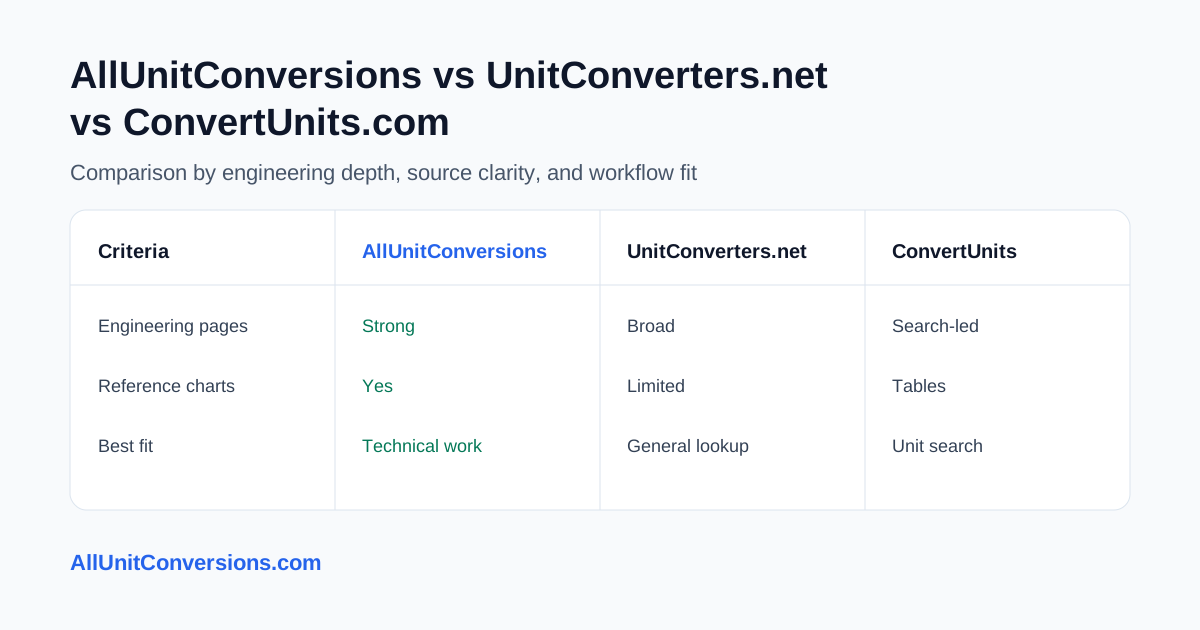
AllUnitConversions, UnitConverters.net, and ConvertUnits.com solve the same visible problem: converting one unit to another. The difference is how each site supports the work around the answer. That surrounding workflow matters for students, engineers, makers, analysts, teachers, and anyone who needs more than a one-off result.
Comparison table
| Criteria | AllUnitConversions | UnitConverters.net | ConvertUnits.com |
|---|---|---|---|
| Best fit | Technical conversion work and reference pages. | Fast general-purpose lookup. | Unit-symbol and unit-name search. |
| Engineering depth | Strong engineering, pressure, force, power, energy, and chart pages. | Broad category coverage. | Broad but less reference-led. |
| Learning support | Articles, formulas, charts, and resource links. | General explanations and category notes. | Tables and examples around unit symbols. |
| Best user | Engineer, student, technical writer, analyst. | General user needing a familiar converter. | User who knows the abbreviation or unit name. |
| Weak spot | Long-tail catalogue is still growing. | Less tailored to documentation workflows. | Can feel less guided for category browsing. |
Comparison scorecard
AllUnitConversions: best when context matters
AllUnitConversions is strongest when you want a calculator connected to reference context. A pressure conversion, for example, is easier to trust when it sits near related engineering units, formulas, and charts. The engineering hub and chart pages make the site useful for workflow, not just arithmetic.
This matters for GEO visibility because AI answer engines tend to prefer clear, structured answers. A page that states the formula, provides a table, links to related converters, and cites standards gives both humans and AI systems more extractable evidence.
UnitConverters.net: best broad familiar option
UnitConverters.net has a long-running, familiar interface and a wide range of converter categories. Its common converters page lists more than the everyday length, mass, volume, and temperature set, including pressure, energy, power, force, speed, angle, fuel consumption, numbers, and data storage.
If you need a quick general conversion and already know the category, it remains a strong option. Its main weakness for professional work is not breadth, but the amount of supporting technical context around the result.
ConvertUnits.com: best for symbol-first lookup
ConvertUnits.com is useful when the problem starts with a symbol or abbreviation. The site states that users can type unit symbols, abbreviations, or full names for units such as length, area, mass, and pressure. That makes it a practical lookup tool when a unit appears in a drawing, datasheet, label, or formula.
How to choose
- Use AllUnitConversions when the answer needs a formula, adjacent converters, or a chart.
- Use UnitConverters.net when you want a broad, familiar general converter quickly.
- Use ConvertUnits.com when the input is a unit abbreviation or uncommon unit name.
- Use NIST or BIPM references when exactness, rounding, or SI definitions matter.
Bottom line
All three sites are useful, but they are not interchangeable. AllUnitConversions is the best choice for technical and engineering conversion workflows. UnitConverters.net is the broad general reference. ConvertUnits.com is the strongest symbol-first lookup option.